Switzerland is made for a road trip: compact distances, excellent infrastructure, spectacular Alpine passes, crystal-clear lakes, and charming cities are often just one or two hours’ drive apart. In this guide, we present three varied road trips (5–10 days) through Switzerland, including practical route ideas, tips for hiking and ski areas, and a compact toll overview covering the Swiss vignette, special tolls, the heavy vehicle fee (LSVA), and car shuttle trains. Secure the right digital vignette for Switzerland in advance so you can use motorways and expressways with peace of mind.
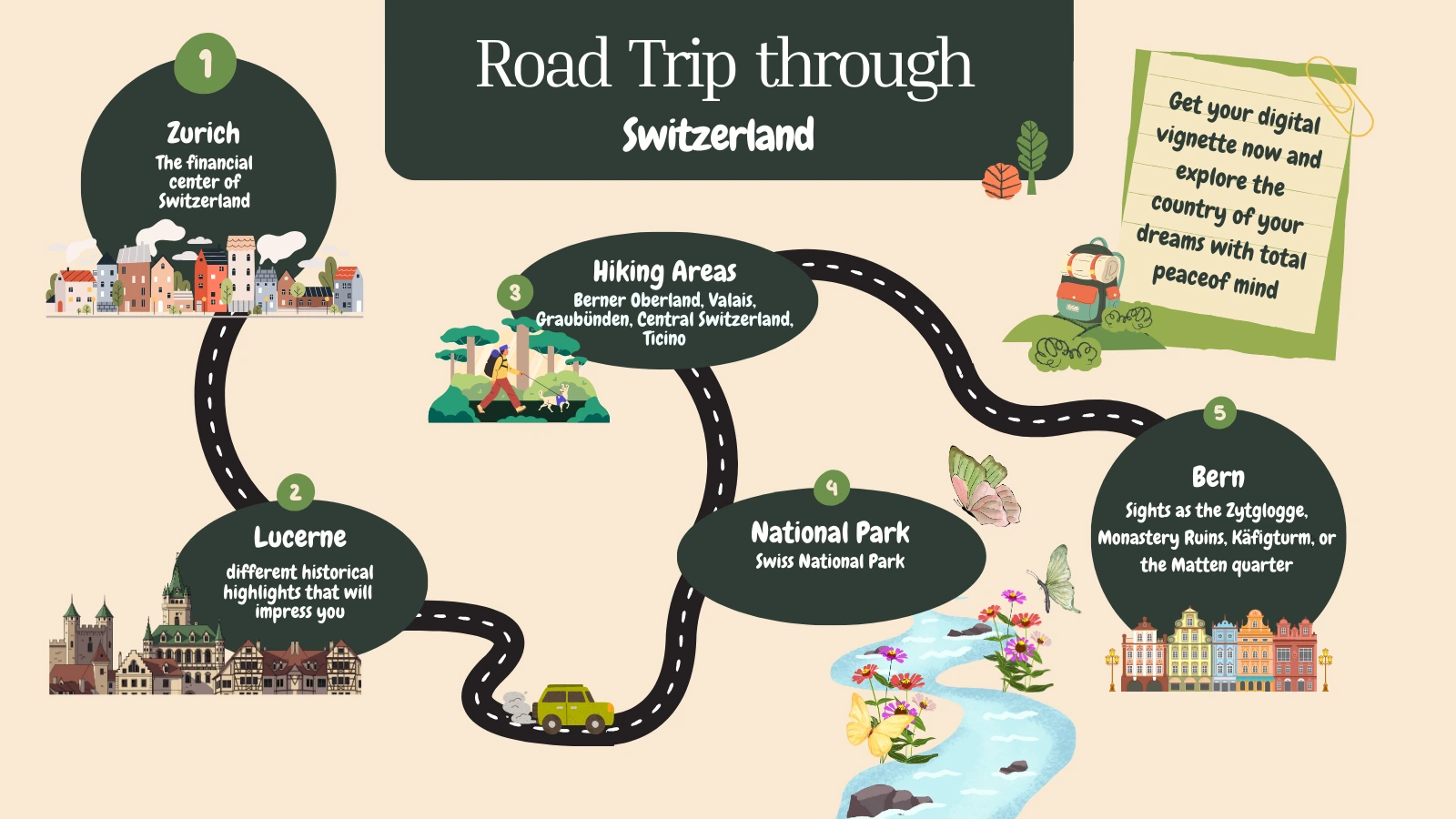
The ideal route for your road trip through Switzerland mainly depends on the time you have available, the season, and your priorities. Options include cities such as Bern, Lucerne, and Zurich, impressive natural highlights like the Swiss National Park, Zermatt with the Matterhorn, or Lake Geneva, plus countless hiking areas and ski regions. A quick guideline for planning:
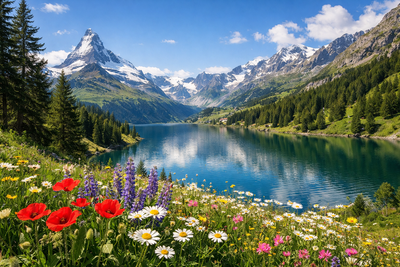
Our sample routes provide a solid base, and you can of course adapt the details flexibly. A simple rule of thumb for relaxed road trips: plan for a maximum of 1–3 hours of driving per day and two activities. This leaves enough time to enjoy the journey instead of racing from highlight to highlight. Also consider seasons and weather when planning:
If you travel during school holidays or long weekends, expect heavier traffic on major transit corridors as well as around Zurich, Bern, and the most popular hiking and ski regions.
Your starting point depends largely on where you live. Some places work especially well as a “hub” for a road trip:
As soon as you use Swiss motorways and expressways, you need a motorway vignette (for vehicles up to 3.5 t permitted gross weight). The most convenient option is the digital vignette, which is linked directly to your license plate—no sticking, no scraping.
This route is ideal if you’re discovering Switzerland by car for the first time and want a mix of city life, lakes, and mountains. It connects Zurich, Lucerne, the famous Jungfrau region, and Bern.
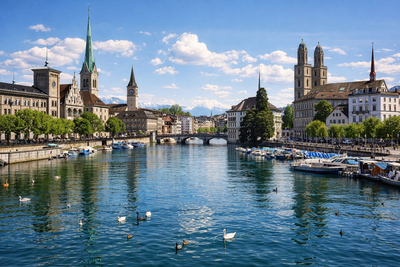
Start your road trip at an easy pace in Zurich. The old town, Lake Zurich, waterfront promenades, and the wide range of dining and shopping options are perfect for one or two days. You’ll find more details in our guide to Zurich.
If you’re arriving by car, plan to get there outside peak hours, as access roads and inner-city districts can get busy in the mornings and evenings. Many hotels offer garages or parking spaces. Alternatively, use park-and-ride facilities on the outskirts and take public transport into the center.
From Zurich, continue to Lucerne. The Chapel Bridge, the Musegg Wall, and the location right on Lake Lucerne make the city a highlight. Combine your stay with a boat trip and an excursion to one of the surrounding mountains.
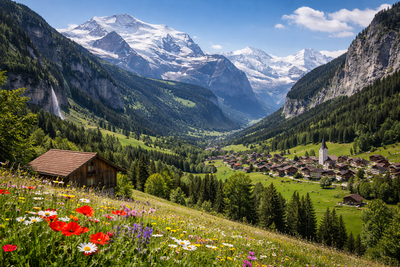
In our article on hiking areas, you’ll find suggestions for popular day-trip destinations.
Next, head toward the Bernese Oberland—for example, the Interlaken region between Lakes Thun and Brienz. From here you can reach famous places like Grindelwald, Lauterbrunnen, or Kleine Scheidegg. Depending on the season, choose between hiking, mountain railways, paragliding, or winter sports.
Our guides to hiking areas and ski areas in Switzerland provide more inspiration.
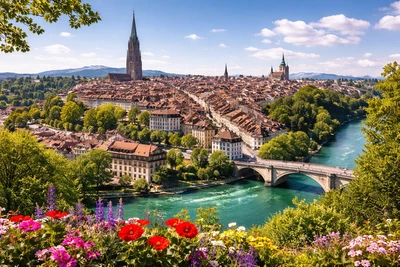
To finish, a stop in Bern is a great idea. The medieval old town (a UNESCO World Heritage Site), the Aare river loop, and the view from the Rose Garden make for a relaxed finale. Use one day for strolling and culture, and another for a detour into the Swiss Plateau or the Jura & Three-Lakes region. More info is available in our article on Bern.
Driving times between stages are usually 1 to 2 hours. Many sections run on motorways, which require a motorway vignette. Scenic alternatives via country roads take longer but offer more insight into smaller towns and valleys.
This road trip is for anyone who wants to combine vineyards, lakes, and high peaks. It’s ideal if you prefer fewer hotel changes while still enjoying plenty of variety—nature, food & wine, and Alpine panoramas.
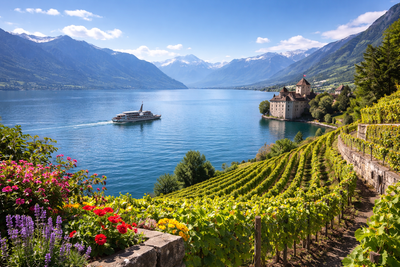
Start in Lausanne or Montreux. Mediterranean-style flair, lakeside promenades, and the Lavaux vineyards make for the perfect introduction. Take a cruise on Lake Geneva or enjoy a relaxed panoramic hike through the terraced vineyards. You’ll find more ideas in our article on hiking areas.
From the lakeside towns, head up into the Vaud Alps. Well-known destinations such as Les Diablerets or Leysin offer hiking trails, viewpoints, and ski resorts in winter. Depending on the season, combine cable cars, easy high-altitude paths, or ski days.
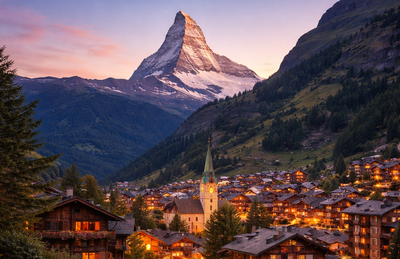
Next up is Valais, a dream for mountain lovers. Zermatt, with the Matterhorn, is a true highlight. Plan enough time for panoramic hikes, glacier experiences, and mountain lifts. Our articles on hiking areas and ski areas provide concrete inspiration.
Depending on your route, using a car shuttle train can be worthwhile—such as at the Lötschberg or Furka. You load your vehicle onto a train and pass through tunnel sections comfortably while staying in the car. Tickets for car shuttle trains are not covered by the vignette and must be paid separately. You can find more information about car shuttle trains in our guide.
On the way back, consider a stop in the Fribourg region or the Swiss Plateau. Historic towns, rolling hills, and lakes make for a relaxed finish. You’ll find more inspiration in our article on hiking areas in Switzerland.
Distances between stops are usually 1–3 hours of driving. You’ll likely use both motorways and mountain roads. In Alpine regions, be mindful of steep gradients, tight hairpin bends, and possible winter closures. You can find information on the vignette and other toll types in our detailed overview of tolls in Switzerland.
The third road trip is aimed at nature lovers who want to explore Eastern Switzerland, Graubünden, and Ticino in more depth. Alpine valleys, passes, lakes, and Mediterranean flair ensure plenty of variety.
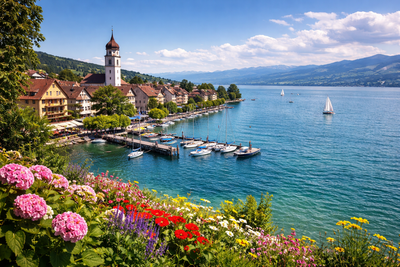
Begin your trip in Eastern Switzerland, for example in Appenzell or on Lake Constance. Rolling hills, traditional villages, and scenic viewpoints offer ideal conditions for easy hikes. You’ll find more ideas in our article on hiking areas in Switzerland.
Continue on to Graubünden. Well-known places such as Davos, Arosa, or St. Moritz attract visitors with Alpine panoramas, lakes, and ski resorts in winter. Depending on the season, choose between hiking, mountain biking, winter sports, or panoramic trains. Our guide to hiking areas in Switzerland will help you plan.
A special highlight is the Swiss National Park, the oldest protected area of its kind in the Alps. Expect marked hiking trails, strict conservation rules, and good chances to spot wildlife. Plan for at least one full day. Read detailed info in our article on the Swiss National Park.
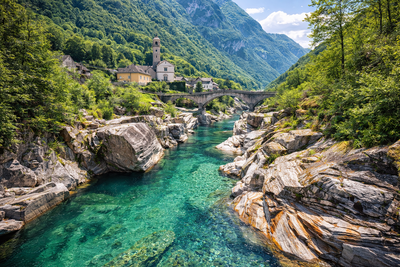
To round things off, head into Ticino. Around Locarno, Ascona, or Lugano you’ll enjoy Mediterranean flair, palm trees, and swimming lakes. An especially recommended excursion is the Verzasca Valley with its turquoise water and stone villages. You’ll find specific tour suggestions in our article on hiking areas in Switzerland.
Driving times are usually between 45 minutes and 2.5 hours, often on winding mountain roads. Car shuttle trains such as the Vereina Tunnel can also be an option to get from one valley to another faster and independent of weather. Keep in mind: car shuttle trains are subject to a fee (independent of the vignette), and some Alpine pass roads as well as certain tunnels (e.g., the Munt la Schera Tunnel) are subject to special tolls and must be paid in addition to the vignette.
Not sure whether you need a vignette for your road trip through Switzerland or which additional fees may apply? In Switzerland, four points matter most: the motorway vignette, the heavy vehicle fee (LSVA), special tolls, and car shuttle trains.
You’ll find a comprehensive overview in our guide to tolls in Switzerland. Our article on car shuttle trains (car loading) also provides detailed information about the different shuttle routes and tunnels. Use our guide to vehicle classes to find out whether you need a digital vignette or have to pay the heavy vehicle fee.
In Switzerland, there is only an annual vignette. You can choose between a sticker vignette and a digital vignette. The digital option is linked to your license plate and can be conveniently ordered from us online—no sticking required.
If your road trip includes multiple countries, you will need a separate product for each vignette country. We offer digital vignettes for multiple countries such as Austria, the Czech Republic, Slovenia, Romania, Hungary, Switzerland, and Slovakia, so you can plan your route comfortably in advance.
Please note that the digital vignette for Switzerland is valid only in Switzerland. Neighboring countries such as Austria, Italy, Germany, France, or Liechtenstein may use different toll systems—some with vignettes, others with distance-based tolls.
DMC Digitale Maut Consulting GmbH makes driving through Switzerland especially easy:
Order your digital vignette for Switzerland now and avoid unnecessary detours or fines.
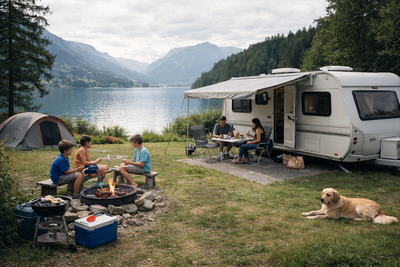
To make your road trip through Switzerland a complete success, keep a few practical aspects in mind:
With these three road trips, you’ll experience Switzerland in all its diversity—from cities like Zurich, Lucerne, and Bern to lakes and vineyards on Lake Geneva and on to Alpine regions such as the Bernese Oberland, Valais, Graubünden, Ticino, and the Swiss National Park. Secure your digital vignette in advance and enjoy short driving times, big panoramas, and the relaxed feeling of being on the right route.
We wish you a safe journey and an unforgettable travel adventure. For planning, feel free to use our route planner. If you have any questions, you can reach us anytime by email.